
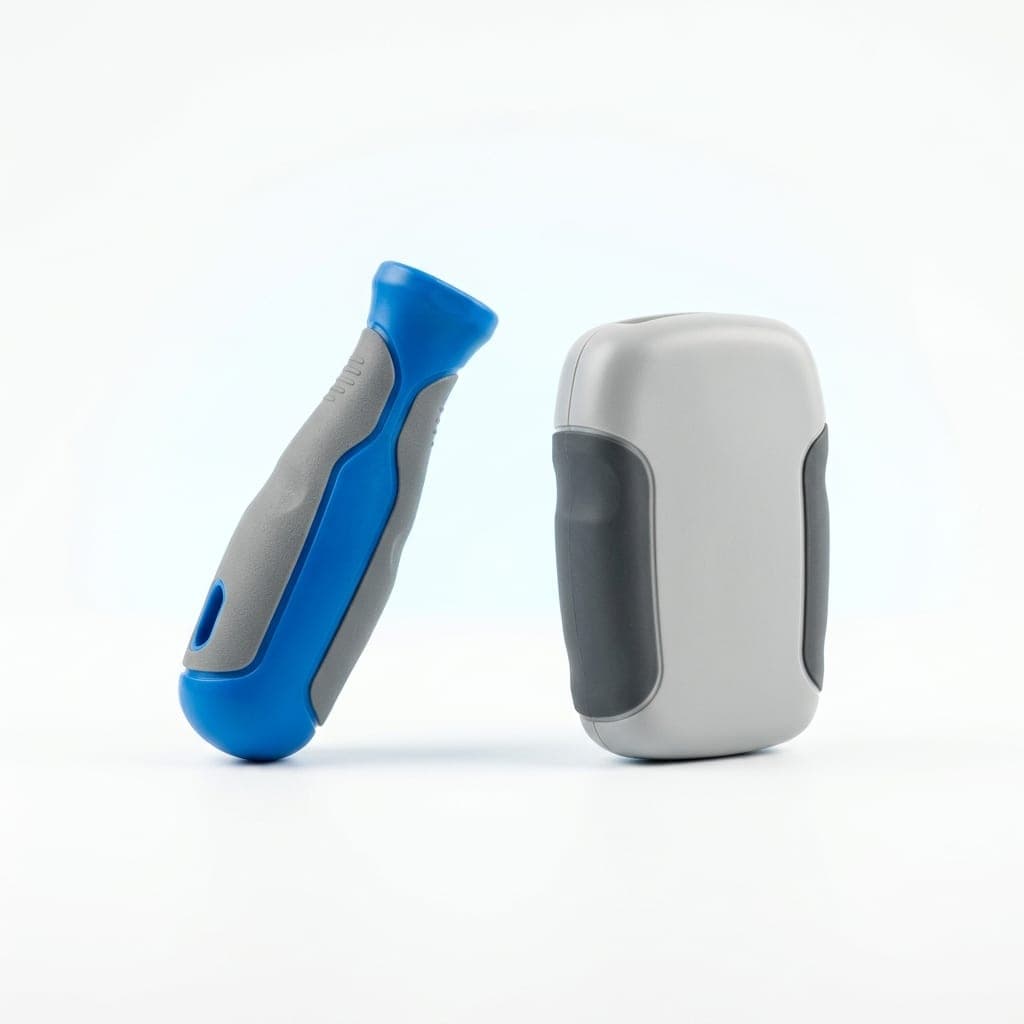
Material compatibility, primerless bonding techniques, and ISO 13485 cleanroom molding protocols for life-science devices.
Liquid Silicone Rubber (LSR) overmolding onto rigid thermoplastics like PEEK, polycarbonate, or stainless steel substrates requires strict thermal control and precision mold venting. Because LSR cures rapidly under elevated temperatures (160°C to 200°C) while the plastic core must remain below its heat deflection threshold, tooling must incorporate isolated heating zones and thermal barrier plates. Mechanical interlocks and chemical plasma activation ensure hermetic seals that withstand repeated autoclave sterilization cycles without delamination, adhering strictly to biocompatibility requirements under ISO 10993.
- Substrate HDT must exceed 140°C to survive the LSR cure cycle.
- Self-bonding LSR grades eliminate messy secondary priming operations.
- ISO 13485 cleanroom molding guarantees bioburden control and particulate-free parts.
1. Substrate Selection & Heat Deflection Temperature (HDT)
Thermoplastics paired with LSR must withstand high mold curing temperatures without creeping:
- PEEK & PPS: Superior high-temperature resistance and chemical inertness for surgical tools.
- Polycarbonate (PC) & Polysulfone (PSU): Excellent dimensional stability for transparent medical manifolds.
- Stainless Steel 316L & Titanium: Common metallic substrates for autoclavable surgical handles and orthopedic implants.
2. Chemical Bonding vs. Mechanical Undercuts
To prevent fluid ingress and microbial growth at the bond interface, modern LSR overmolding combines self-adhesive primerless silicones with mechanical dovetails and through-hole mechanical interlocks.
Actionable Manufacturing Recommendations
For medical device prototypes, our Class 8 cleanroom facilities provide ISO 10993 USP Class VI certified silicone overmolding with full lot traceability.
Need a competitive manufacturing quote?
Upload your 3D CAD files for instant pricing, engineering review, and automated DFM feedback.