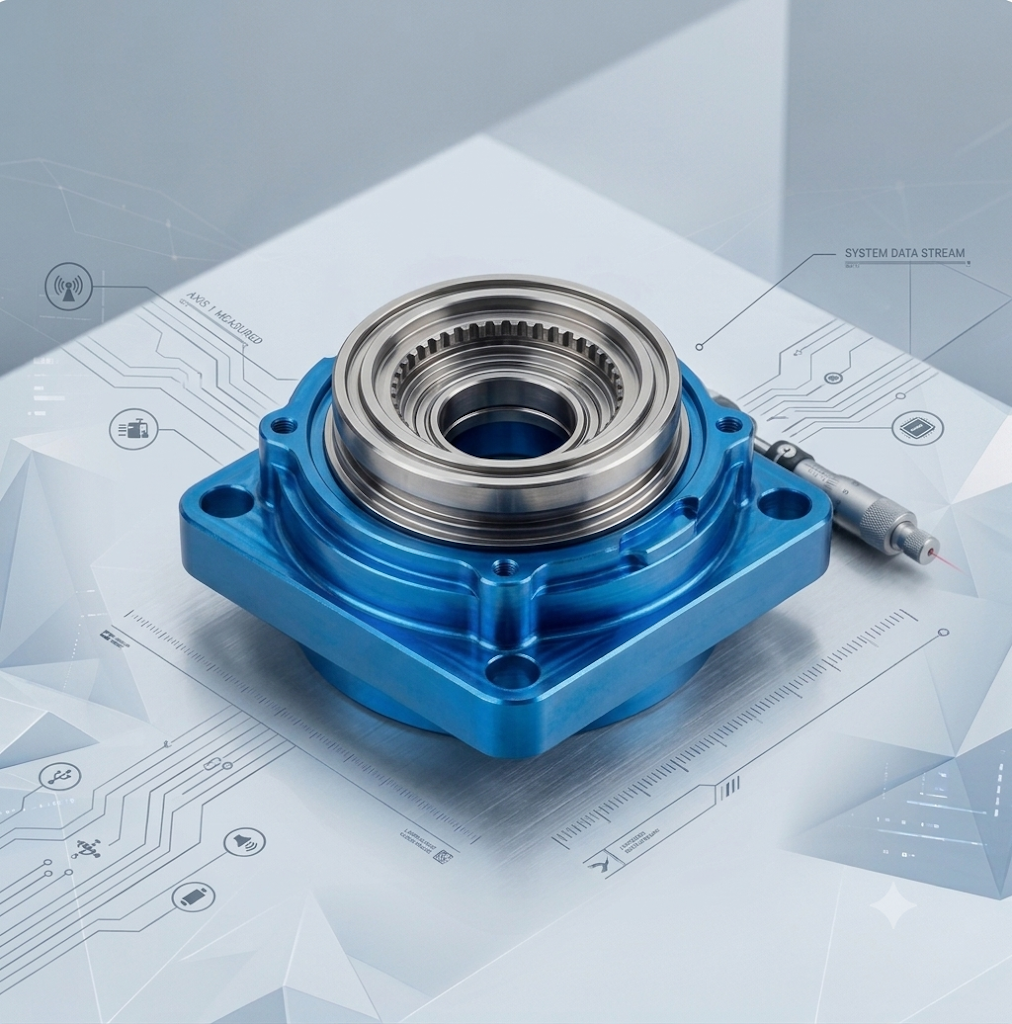
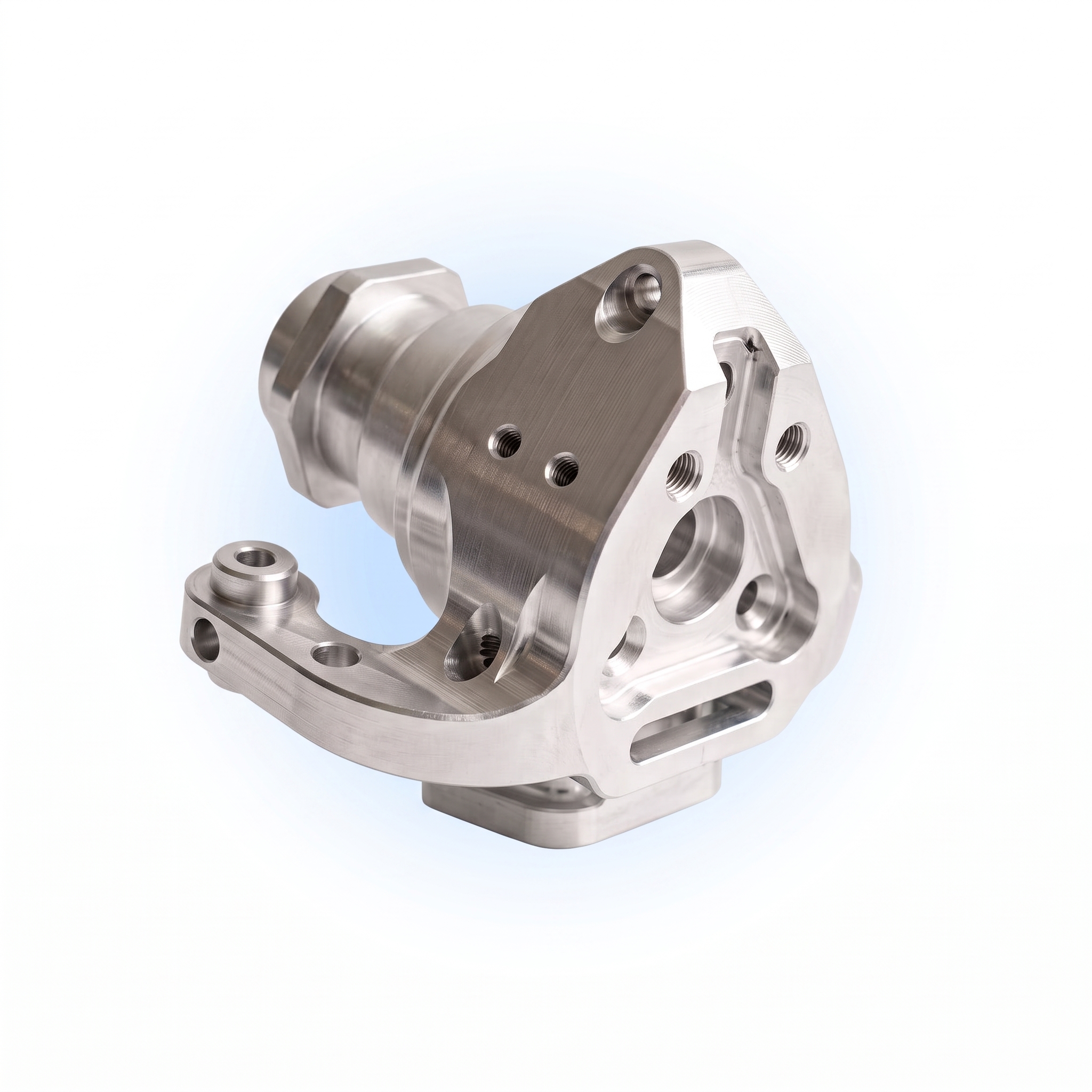
2 Stage Planetary Gearbox
A 2 stage planetary gearbox, also referred to as a two-stage planetary gear reducer, achieves speed reduction and torque multiplication through two consecutive planetary gear sets arranged in series.
Sango Automation Limited is one of the most reliable manufacturers and suppliers of 2 stage planetary gearboxes in China. With abundant experience, we warmly welcome you to wholesale advanced 2 stage planetary gearboxes made in China from our factory. Good service and quality products are available.
How the 2 Stage Planetary Gearbox Works
Compared to single- and three-stage planetary gearboxes, the two-stage planetary gearbox can raise the reduction ratio to 100:1 without significantly increasing axial length, and without a significant drop in transmission efficiency (a two-stage planetary gearbox is typically ≥ 94%). This balance between "reduction ratio, efficiency, and compactness" makes the two-stage planetary gearbox widely used in robotic joint actuators and industrial automation equipment.
As a manufacturer of precision transmission components, Sango offers batch custom production (OEM/build-to-print) based on your drawings. If you are seeking a reliable manufacturing partner for 2-stage planetary gearboxes, whether for robot joints, servo axes, or automation equipment, please feel free to send your drawings or specifications to request a quote.
Key Specifications
Backlash & Precision Grades
Our two-stage planetary gearboxes are available in three precision grades.
What Backlash Means
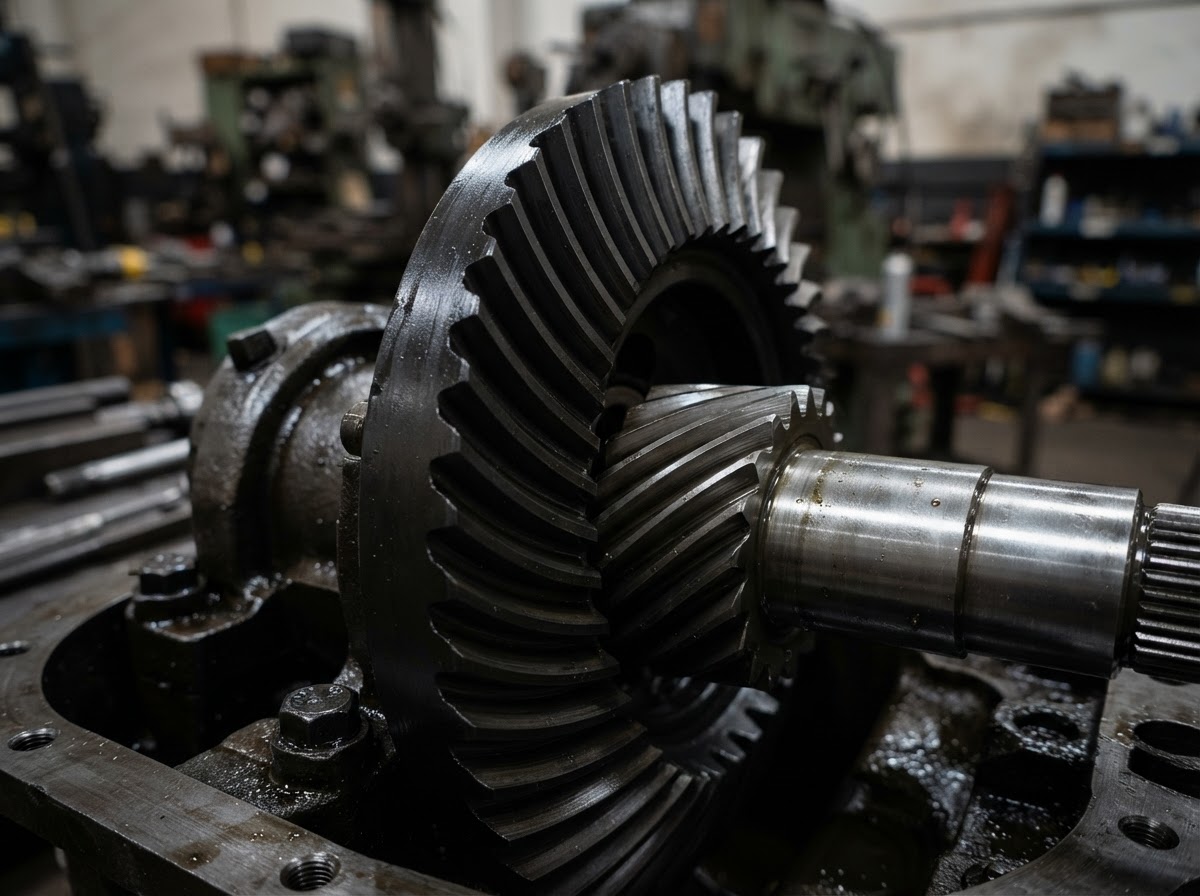
Backlash is a key indicator of a planetary gearbox's precision and determines the system's repeatability. It refers to the angle the input shaft must rotate freely before it can re-engage and drive the output shaft after the direction of the output load reverses.
P2 (Standard)
Suitable for applications with general precision requirements, such as servo drives and AGV chassis transmissions. This is our most popular general-purpose precision grade.
P1 (Precision)
The mainstream choice for applications like robotic joint actuators and CNC rotary tables, offering a balance between precision and cost.
P0 (Ultra-precision)
Designed for applications demanding extremely high positioning accuracy and rigidity, such as high-precision robotic joints and medical equipment drives. Achieved through tooth grinding and rigorous assembly processes.
Total Backlash Is Not a Simple Sum
The total backlash of a two-stage planetary gearbox is not simply the sum of the backlash from each stage. Because errors from the second stage are attenuated by the reduction ratio of the first stage before reaching the output, a design that optimizes error distribution between stages keeps total backlash within the target range.
Tailored Assessment
The parameters above represent our typical manufacturing capabilities. Specific values are subject to customer drawings and technical specifications. If you already have design drawings or target specifications, please send them to us for a tailored manufacturing assessment and quotation.
Technical Parameters
All specifications apply to OEM / custom-drawing orders.
2 Stage Planetary Gearbox Technical Parameters
All specifications apply to OEM / custom-drawing orders. Final tolerances are confirmed against the customer's drawing prior to production.
| Parameter | Value / Range | Note |
|---|---|---|
| Number of stages | 2 | Fixed |
| Gear ratio range | 10:1 – 100:1 | Configurable |
| Backlash | P0 / P1 / P2 | P2 standard ≤ 7 arc min; P1 precision ≤ 5 arc min; P0 ultra-precision ≤ 3 arc min |
| Transmission efficiency | ≥ 94% | At rated load, 2-stage |
| Gear tooth configuration | Hardened tooth surface | Case hardening + grinding |
| Gear accuracy (ISO/DIN/GB) | Grade 5 | Tooth grinding required |
| Lubrication | Lifetime grease | Maintenance-free |
| Installation orientation | Any | Coaxial inline |
Six mounting orientations
The same frame can be bolted base-down, wall mounted or inverted, and the motor can sit above, behind or in line. Quote the code with your order so the unit ships with the oil level and breather set for that orientation.
Base down, output up
Standard dial-table orientation.
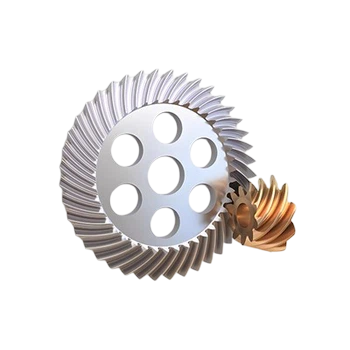
Base down, output side
Right-angle output for wheel drives.
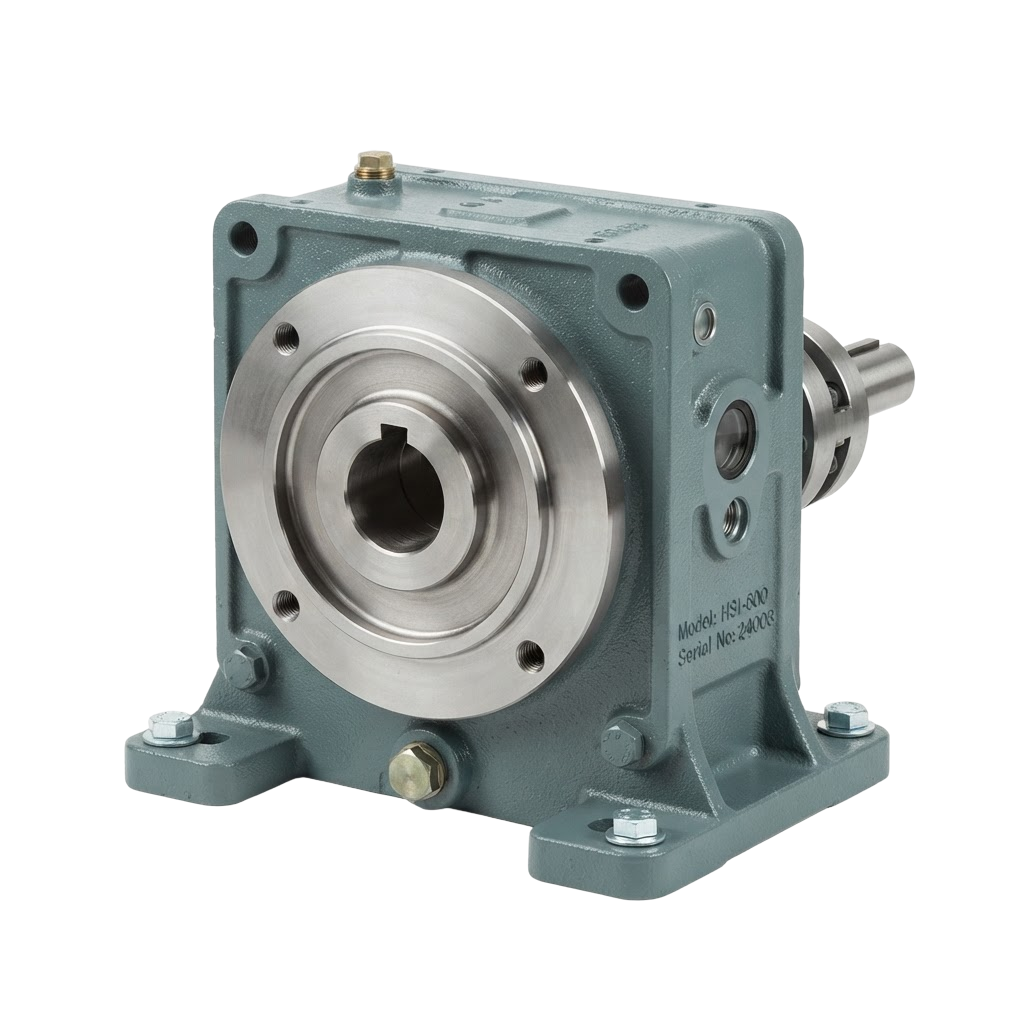
Wall mount, output horizontal
Saves floor space on narrow frames.
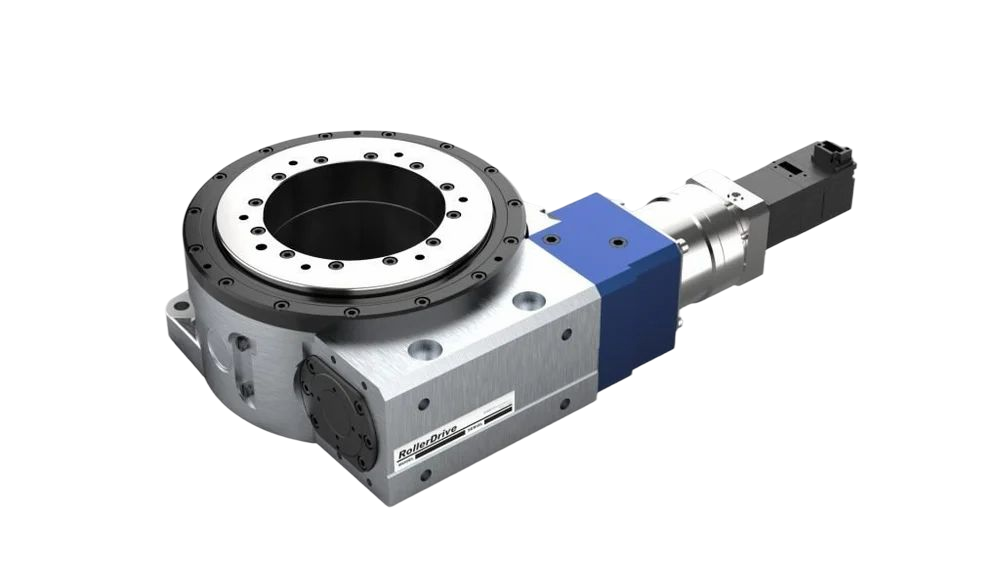
Inverted, output down
Overhead carrier and gantry work.
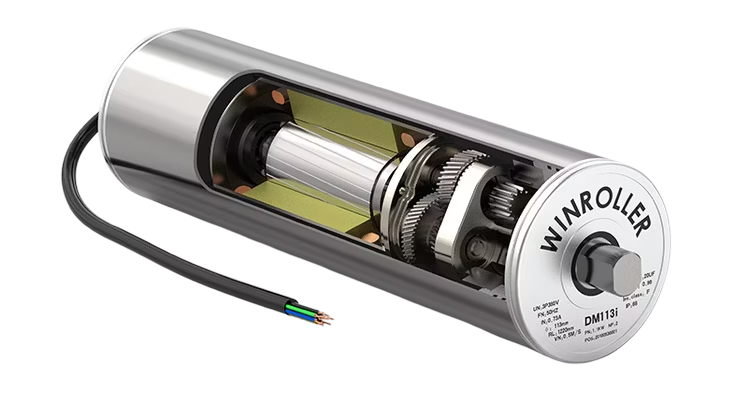
Motor top-mounted
Gearmotor stacked over the housing.
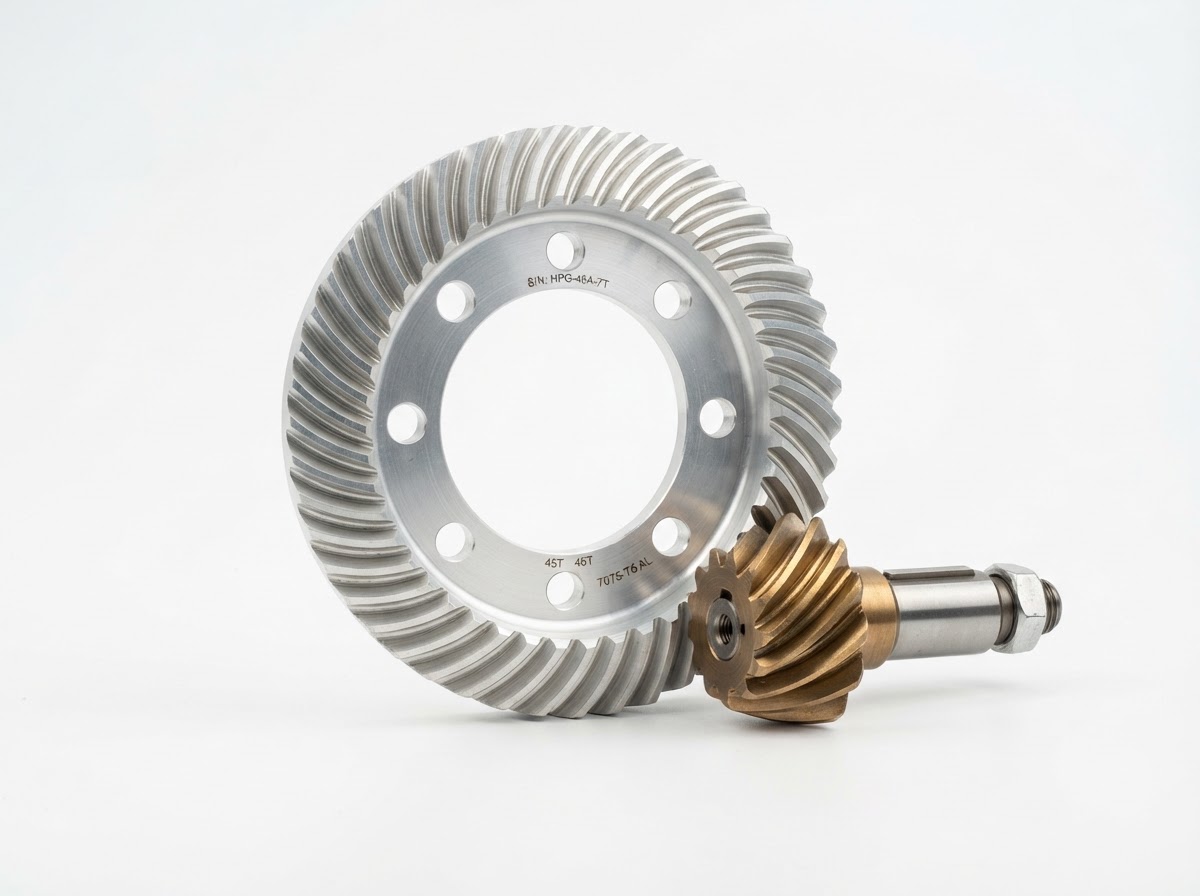
Motor rear-mounted
In-line drive for shallow installations.
Customization Process
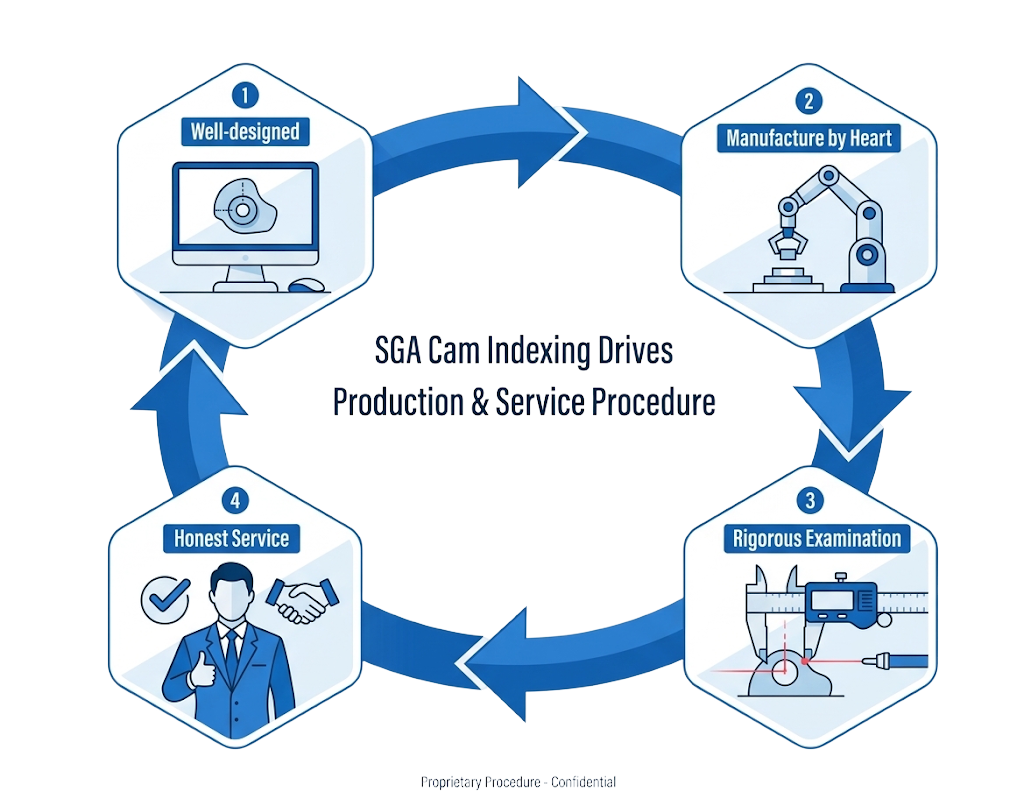
Our collaborative customization process ensures your custom gearbox is optimized for both performance and manufacturability. Here is how we work together from drawing to mass production.
What happens next
Preliminary Consultation & NDA Signing
To protect your proprietary intellectual property (IP), we begin by executing a mutual Non-Disclosure Agreement (NDA). Once signed, we conduct technical alignment and review your 2D & 3D drawings.
Engineering Review & Feasibility Analysis
Our engineering team analyzes your specified working conditions (load profiles, duty cycles, output speeds), evaluating materials, heat treatment, and tolerances.
Prototype Manufacturing & Factory Testing
Prototypes undergo rigorous in-house validation, including precision backlash, transmission efficiency, and dimensional inspection.
Customer Validation & Sign-off
We ship prototype units along with test reports for system integration and application testing. Mass production begins after official approval.
Mass Production Execution
Strict quality control protocols including Process FMEA, first article inspection (FAI), and batch inspection reports ensure consistent quality.
You Might Also Like
Explore our complete range of synchronized cam mechanisms and motion handlers.
Applications of 2 Stage Planetary Gearboxes
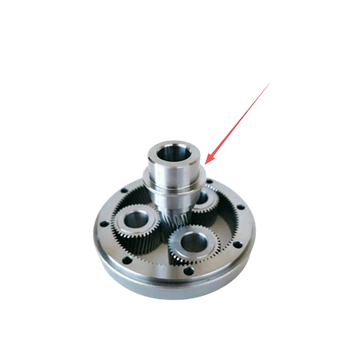
Consider the scenarios of robot joints and AGV drives. While both use two-stage planetary structures, their design priorities differ significantly. Robot joints demand extremely low backlash (P1/P0 classes) and high axial compactness, whereas AGV drive wheels prioritize continuous load-bearing capacity and load sharing among multiple planetary gears, for which P2-class backlash is typically sufficient. Among these applications, robot joint actuators have seen the most significant growth in demand over the past two years. Joint drive modules for humanoid robots and quadruped robots typically feature a high level of integration, housing a two-stage planetary gearbox, frameless torque motor, encoder, and crossed-roller bearings within a single unit. The ring gear is integrated directly into the motor housing, so the housing's coaxiality and bore precision directly impact the gearbox's assembly clearance and operating noise. Additionally, the shaft connecting the two planetary carrier stages must ensure sufficient rigidity within a very limited axial space. If your application requires a gear ratio between 10:1 and 100:1, involves strict volume constraints, and needs direct coupling with a servo motor, a two-stage planetary gearbox is likely the optimal solution.
Popular Products
Engineered for maximum reliability and continuous 24/7 industrial production
Frequently Asked Questions?
Technical answers regarding 2 stage planetary gearboxes.